
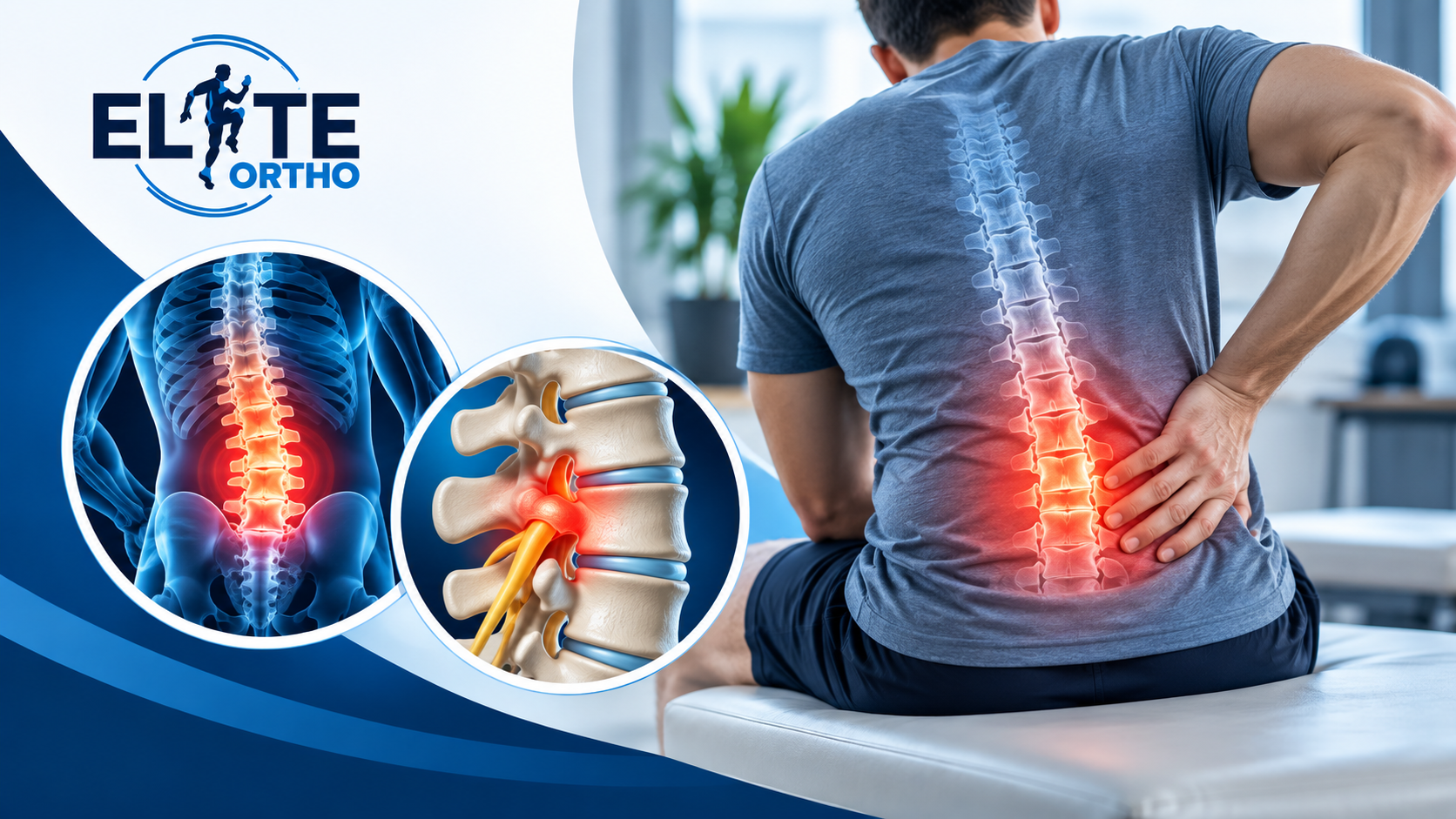
Back pain doesn't wait for a good time. It shows up reaching for a coffee mug. Tying your shoes. Trying to fall asleep and just — not getting comfortable, no matter how you shift.
And once it settles in, it doesn't stay in one lane. It starts eating into things you didn't expect. Work. Sleep. Patience.
If you're in Gaithersburg or anywhere else in Montgomery County and this has been going on more than a couple of weeks — or it keeps coming back, or it's just wearing you down — that's usually the point to stop toughing it out and see a back pain specialist in Gaithersburg, MD. Below: what causes it, what actually happens at a specialist visit, and what treatment looks like before surgery is even on the table.
Back Pain Specialist in Gaithersburg, MD
Key Takeaway: Persistent, recurrent, or radiating back pain may warrant evaluation by a medical professional. Treatment depends on identifying the underlying cause, and many back pain conditions can initially be managed without surgery.
What Does a Back Pain Specialist Treat?
Orthopedic specialists deal with the musculoskeletal side of things — muscles, discs, joints, nerves. All the stuff that makes up your spine and holds it together.
"Back pain" isn't one diagnosis. It's a symptom. Could be a pulled muscle. Could be a compressed nerve. Could be years of wear finally catching up. A back pain specialist ends up evaluating muscle strains, herniated discs, degenerative disc disease, sciatica, lumbar radiculopathy, spinal stenosis, arthritis, sports injuries — the list goes on.
Here's the thing: a lot of these feel almost identical from the inside. Which is exactly why guessing at the cause before treating it usually backfires.
What Are the Most Common Causes of Back Pain?
Muscle and Ligament Strains
The most common cause, hands down. An awkward lift. A sudden twist. Just doing too much, too fast. Rest and time usually take care of it — though "usually" doesn't mean always, and not everyone heals on the same clock.
Herniated or Bulging Discs
The cushioning inside a disc pushes out through a weak spot and presses on a nearby nerve. When that happens, the pain doesn't stay put. It can travel into the buttock, down the leg.
Sciatica and Lumbar Radiculopathy
Pain tracking the sciatic nerve's path, usually because a nerve root is getting pinched somewhere in the lower spine. People use "sciatica" and "lumbar radiculopathy" like they're the same thing. They're close, not identical — one describes how the pain feels, the other describes what an exam actually finds.
Arthritis and Degenerative Changes
Years of wear on the spine's joints and discs. No single moment where it "happened" — just a slow build that eventually turns into chronic pain.
Sports and Activity-Related Injuries
One bad hit during a game. Or repetitive strain piling up over time. Either way, it can injure the back outright or aggravate something that was already there — especially coming back from time off.
Quick distinction worth making: "back pain" tells you where. It doesn't tell you why. Two people, nearly the same pain, completely different problem underneath.
When Should You See a Back Pain Specialist?
Book an evaluation with a back pain specialist in Gaithersburg, MD if the pain won't let up. If it keeps coming back. If it's cutting into your normal routine. If it started after an injury, or it's moving into your leg, or you've got numbness, tingling, weakness, trouble walking. Also — if you've already tried rest and over-the-counter medication and nothing's changed.
One more thing, and it matters: some symptoms need attention now, not "next available appointment." New bowel or bladder issues. Weakness that's clearly getting worse. Back pain after serious trauma. Other major neurological symptoms. Any of that — don't wait.
What Does It Mean When Back Pain Travels Down Your Leg?
Pain moving from your lower back into your leg usually means a nerve's being irritated or squeezed somewhere along its path. The pattern alone won't tell you exactly where, though. Where it travels, whether there's numbness, whether specific muscles feel weak — all of that gives a clinician something to go on. Confirming it still takes an actual exam. Sometimes imaging too.
Elite Ortho DMV wrote more on this in Sciatica That Won't Go Away: When Should You See a Spine Surgeon? — worth reading if this sounds like you.
How Does a Back Pain Specialist Diagnose the Cause?
A back pain specialist in Gaithersburg, MD starts with talking. When it began. What makes it worse, what helps. Then a physical exam — strength, reflexes, range of motion, anything neurological like numbness or tingling.
Imaging isn't automatic. X-rays and MRIs come in when the exam raises something specific, or symptoms have outlasted a fair trial of conservative treatment, or certain red flags show up. Plenty of people get better before an MRI would even change the plan.
What Treatments Are Available for Back Pain?
No single protocol here. It depends on the diagnosis, how bad it is, your history, what you're actually trying to get back to.
Physical Therapy and Rehabilitation
Usually where treatment starts. Exercises for strength, flexibility, getting normal movement back. Elite Ortho DMV builds PT into the plan from the start — not as a fallback.
Activity and Lifestyle Modification
Small stuff — how you sit, how you move, cutting back on whatever's flaring things up. Adds up to real relief while healing happens.
Medications
OTC or prescription meds can help with pain and inflammation. That's a conversation with a clinician, though — not something to freelance, especially past short-term OTC use.
Injection-Based Treatments
Corticosteroid or epidural injections, for certain conditions, calm inflammation around an irritated nerve. Whether it applies to you depends entirely on the diagnosis — ask your provider directly.
When Is Surgery Considered?
Most back pain never needs it. It becomes a real option in narrower situations — confirmed nerve compression, symptoms that haven't moved despite a real trial of conservative treatment, or neurological symptoms getting worse, not better. Even then, it's weighed against other options based on your actual imaging and exam. Not a default.
How Can You Reduce the Risk of Back Pain?
No guarantees here. But a few habits tilt the odds:
- Stay active — don't swing between total inactivity and going all-out
- Build core and back strength
- Lift with your knees, keep loads close to your body
- Set up your workspace so it's not working against you
- Skip long stretches of doing nothing
- Ease into new routines instead of diving in
- Keep the basics in check — weight, sleep, general conditioning
None of it's a guarantee. Just better odds.
Why Choose a Local Back Pain Specialist in Gaithersburg, MD?
There's a real case for staying close to home — easier follow-ups, smoother PT coordination, a plan that gets adjusted as you go instead of managed from a distance. Elite Ortho DMV's Gaithersburg office — 800 S. Frederick Avenue, Suite 110 — evaluates back pain and other musculoskeletal issues for patients across Gaithersburg and the rest of Montgomery County.
Get Help for Persistent Back Pain in Gaithersburg
Back pain doesn't always come from the same place. Figuring out what's actually driving yours — that's the real starting point. Not a guess based on where it hurts. If it's been messing with your day-to-day in Gaithersburg or nearby, a back pain specialist at Elite Ortho DMV can help track down the source and figure out what's next. Call 888.746.1665 or visit the contact page to schedule.
When should I see a back pain specialist?
Stuck around more than a couple weeks? Keeps coming back? Getting in the way of daily life, or showing up with numbness, tingling, weakness? That's your sign to get it looked at instead of pushing through.
What causes lower back pain that travels down the leg?
Usually a nerve root getting irritated or compressed in the lower spine — herniated disc, spinal stenosis, other degenerative changes. An exam confirms which.
Can an orthopedic doctor treat back pain?
Yes. Strains to nerve-related issues — conservative treatment, or surgery when it's actually needed.
Do I need an MRI for back pain?
Not automatically. Most people improve with conservative treatment first. MRIs get reserved for specific neurological concerns, symptoms that drag on, or red-flag findings.
Can a herniated disc heal without surgery?
Often, yes — physical therapy, activity changes, time. Especially without major or worsening neurological symptoms. Surgery comes up when conservative treatment doesn't work, or something more concerning shows up.
Get expert care before your symptoms progress with Elite Ortho DMV
At Elite Ortho DMV, our advanced surgical techniques are designed to match your body’s unique anatomy helping you move freely and recover faster.