
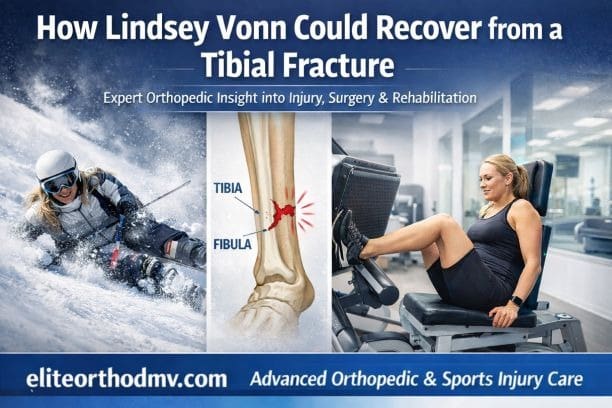
Elite downhill skiing is one of the most physically demanding and high-risk sports in the world. Speeds can exceed 80 miles per hour, terrain is unpredictable, and the forces placed on the body during turns and landings are immense. Among the most serious lower-leg injuries a skier can sustain is a tibial fracture, a break in the shinbone.
If an elite athlete like Lindsey Vonn were to suffer a tibial fracture, recovery would require a carefully structured medical and rehabilitation plan. Let’s explore what that recovery process typically looks like, the stages involved, and what it takes for a world-class skier to return to peak performance.
Understanding a Tibial Fracture
The tibia, or shinbone, is the larger and stronger of the two bones in the lower leg. It bears most of the body’s weight and plays a crucial role in balance, stability, and movement, all essential components in downhill skiing.
Tibial fractures can vary widely in severity:
- Stress fractures – small cracks caused by repetitive force
- Simple fractures – clean breaks without bone displacement
- Compound fractures – bone breaks through the skin
- Comminuted fractures – bone shatters into multiple pieces
For a high-speed skier, fractures are often the result of twisting forces during a fall or impact with terrain. The type and severity of the fracture largely determine the recovery timeline.
Stage 1: Immediate Medical Evaluation and Stabilization
The first step in recovery begins at the time of injury. Ski patrol teams and medical professionals typically immobilize the leg immediately to prevent further damage.
Diagnostic imaging such as X-rays, CT scans, or MRI scans confirm:
- The exact location of the fracture
- Whether the bone is displaced
- If surrounding ligaments or soft tissue are involved
In severe cases, surgery is required. Surgeons may insert metal rods, plates, or screws to stabilize the tibia, a procedure known as open reduction and internal fixation (ORIF). For elite athletes, surgical precision is critical to ensure proper alignment and long-term performance.
Stage 2: Early Healing (Weeks 1–6)
Bone healing begins almost immediately, but the first six weeks are critical.
During this phase:
- Weight-bearing is usually restricted
- The leg may be placed in a cast or brace
- Swelling and inflammation are managed
- Pain control is prioritized
Athletes focus on maintaining cardiovascular fitness through upper-body workouts and non-weight-bearing activities such as swimming or stationary biking (if approved by medical professionals).
For a professional skier, maintaining overall conditioning is essential to prevent muscle loss and deconditioning during immobilization.
Stage 3: Gradual Weight-Bearing and Mobility (Weeks 6–12)
Once imaging confirms the bone is healing properly, doctors typically allow gradual weight-bearing.
This stage includes:
- Transitioning from crutches to partial weight-bearing
- Gentle range-of-motion exercises
- Early strengthening work
- Physical therapy sessions multiple times per week
Restoring ankle mobility and knee function is especially important for skiers. The tibia works closely with these joints during carving turns and absorbing impact.
For an elite athlete, rehabilitation is aggressive yet carefully monitored. The goal is not just healing, it’s restoring explosive power, balance, and coordination.
Stage 4: Strength and Performance Rehabilitation (3–6 Months)
This phase separates casual recovery from elite recovery.
Once the bone is fully healed, the focus shifts to:
- Regaining full lower-leg strength
- Improving proprioception (balance and body awareness)
- Plyometric exercises for explosive movement
- Sport-specific drills
Skiers rely heavily on eccentric muscle control, the ability to control movement while muscles lengthen under tension. This is critical during downhill racing.
At this stage, advanced training tools may be introduced:
- Anti-gravity treadmills
- Balance boards
- Single-leg strength training
- Agility ladder drills
Mental recovery also becomes important. Confidence plays a major role in returning to high-speed competition.
Stage 5: Return to Snow
Returning to skiing is a gradual process.
Athletes typically begin with:
- Controlled slope sessions
- Technical drills at moderate speeds
- Reduced training intensity
Medical teams closely monitor for:
- Pain or swelling
- Strength imbalances
- Psychological hesitation
Full competition readiness can take anywhere from 6 to 12 months depending on fracture severity. For elite downhill skiers, even minor deficits in strength or reaction time can impact performance.
The Role of Sports Medicine and Technology
Elite athletes benefit from advanced recovery tools that improve healing outcomes:
- Bone stimulators to promote bone growth
- Blood flow restriction therapy
- Cryotherapy for inflammation control
- Motion capture analysis to refine biomechanics
Customized rehabilitation programs are built around performance data. Trainers and physicians collaborate to ensure the tibia heals properly while preventing compensatory movement patterns that could lead to secondary injuries.
Psychological Recovery Matters
A tibial fracture isn’t just a physical setback, it can be a mental challenge.
High-speed skiing demands fearlessness. After a significant injury, athletes may experience:
- Fear of reinjury
- Hesitation during turns
- Reduced confidence at high speeds
Sports psychologists often play a critical role in recovery. Visualization techniques, controlled exposure training, and confidence-building exercises help athletes mentally prepare for return to competition.
What Influences Recovery Time?
Several factors determine how quickly someone can recover:
- Severity of the fracture
- Age and overall health
- Surgical vs. non-surgical treatment
- Quality of rehabilitation
- Pre-injury fitness level
Elite athletes often recover more efficiently due to access to top-tier medical teams, nutritionists, and trainers. However, bone healing still follows biological timelines that cannot be rushed.
Can an Athlete Return to Peak Performance?
The encouraging news is that many professional athletes return to competition after tibial fractures.
Success depends on:
- Proper surgical alignment
- Full restoration of muscle strength
- Balanced biomechanics
- Comprehensive rehabilitation
In some cases, athletes even return stronger due to improved conditioning and refined training methods developed during rehab.
Preventing Future Injury
Once fully recovered, preventing reinjury becomes a priority.
Preventative strategies may include:
- Strengthening the lower leg and core
- Enhancing flexibility
- Improving landing mechanics
- Adjusting equipment setup
- Monitoring training intensity
Ski boots and binding settings are carefully evaluated to reduce excessive torque forces that can stress the tibia.
Conclusion
A tibial fracture is undoubtedly a serious injury, particularly in a sport as physically demanding as downhill skiing. However, with modern orthopedic care, advanced rehabilitation methods, and a structured return-to-sport protocol, recovery is entirely achievable.
From early diagnosis and surgical precision to physical therapy and mental conditioning, every phase of recovery plays a vital role in helping athletes safely return to peak performance. Whether you’re a professional skier or a recreational athlete, proper medical guidance significantly improves outcomes and reduces the risk of long-term complications.
Clinics like Elite Ortho DMV specialize in comprehensive orthopedic care, helping patients recover from fractures, sports injuries, and complex musculoskeletal conditions with personalized treatment plans designed for long-term strength and mobility.
Frequently Asked Questions (FAQs)
1. How long does it take to recover from a tibial fracture?
Recovery can take 3 to 12 months depending on severity, treatment method, and rehabilitation quality.
2. Does every tibial fracture require surgery?
Not always. Minor or stable fractures may heal with casting and immobilization, while displaced fractures typically require surgical fixation.
3. Can athletes return to professional competition after a tibial fracture?
Yes. Many athletes successfully return to competition after full rehabilitation and medical clearance.
4. Is physical therapy necessary after a tibial fracture?
Yes, Physical therapy restores strength, mobility, balance, and sport-specific performance.
5. What are the biggest risks after returning to sport?
Reinjury, muscle imbalances, and reduced confidence are common concerns. Proper rehab and gradual return-to-play protocols reduce these risks.
Get expert care before your symptoms progress with Elite Ortho DMV
At Elite Ortho DMV, our advanced surgical techniques are designed to match your body’s unique anatomy helping you move freely and recover faster.