
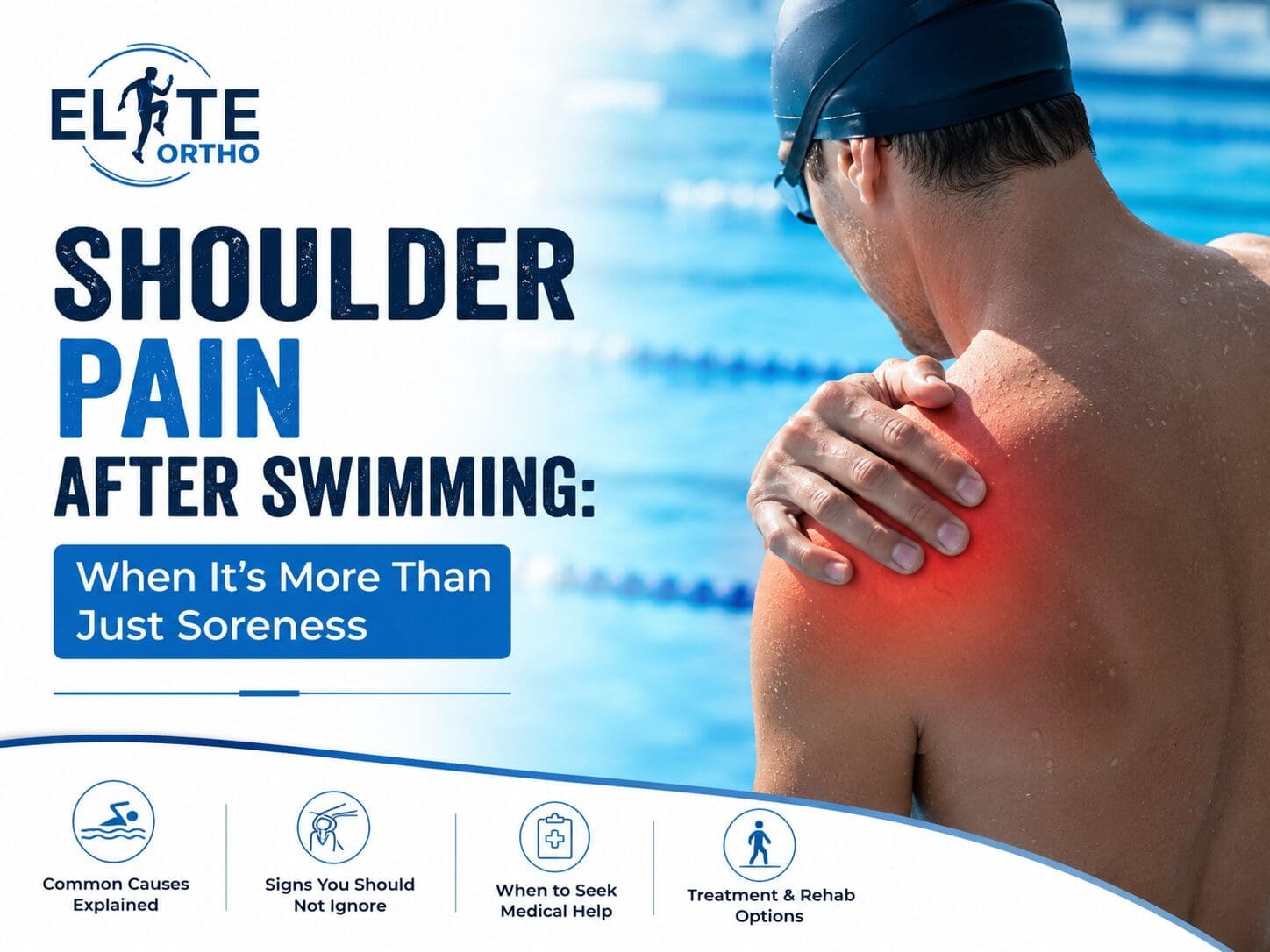
Swimming is one exercise that's often extolled as a great low-impact activity for overall fitness. It enhances muscle strength, promotes cardiovascular health, and reduces stress on the joints when compared to many land-based exercises. But even though it is said to be a great sport for the joints, swimming can still cause shoulder pain, which is more than just “after-workout” pain.
Mild pain or soreness after a difficult swim session is common for many swimmers, while if that pain is continuing, the muscles are weak, there is a decrease in mobility, or pain is experienced during daily activities, the shoulder may have a problem. The shoulder joint is a result of this repetitive overhead arm movement and experiences high stresses from each stroke performed when swimming.
Learning about the possible causes of swimming-related shoulder pain can give you an idea of when you should seek a professional evaluation and treatment.
Why does swimming put a strain on the shoulder?
The shoulder joint is the most mobile joint in the human body that allows a lot of movement in a lot of directions. This mobility comes with a price: muscles, tendons, ligaments, and soft tissues are key to the stability of the shoulder.
The shoulder also rotates, stretches to overhead, and pumps force through the water again and again when swimming, especially freestyle, butterfly, and backstroke. Thousands of overhead arm movements can be made in a single training session for competitive swimmers.
Repeatedly using these movements over time can lead to soft tissue irritation, inflammation, and a range of shoulder injuries.
Common risk factors are:
- Poor swimming technique
- Overtraining
- Muscle imbalances
- Inadequate warm-up routines
- Limited shoulder flexibility
- Weak rotator cuff muscles
- Sudden increases in training intensity
When these all come together, shoulder pain can develop and become aggravated if not treated.
Rotator Cuff Irritation: A Common Swimmer’s Injury
Rotator cuff irritation is one of the most common shoulder problems among swimmers.
The rotator cuff is made up of four muscles and tendons that hold the shoulder joint in place and help move the arm. During swimming, these are used to maintain the shoulder properly aligned and help generate power.
They can irritate, inflame, or tear the small rotator cuff tendons as a result of repeated overhead movements.
Symptoms of Rotator Cuff Irritation
The signs of rotator cuff irritation may include the following:
-
Pain that occurs when or after swimming activities
-
Difficulty using the upper part of the body above the shoulders
-
Shoulder weakness
-
Difficulty lifting objects
-
Night pain on the affected side
If the pain continues, it's a sign of tissue irritation and needs to be addressed, although early symptoms might seem normal.
Prevention Tips
- Strengthen the rotator cuff muscles
- Warm up before entering the pool
- Improve stroke mechanics
- Allow adequate recovery between workouts
- Gradually increase training volume
Treating the symptoms early can avoid more extensive damage to the tendons in the future.
What To Do When Shoulder Injury Becomes a Problem: Rotator Cuff Tears
Although rotator cuff irritation can start as a simple inflammation in the tendon, a rotator cuff tear may occur in the tendon over time and may be either partial or full thickness if the overhead motion is repeated or sustained by the shoulder. Swimmers who ignore chronic and/or persistent shoulder pain or swim through the pain are likely to increase their risk of developing tendon damage.
A rotator cuff tear occurs when one or more of the rotator cuff tendons become frayed or torn, reducing the shoulder's strength and stability. Tears are more likely to occur with age because of natural wear and tear, but they can also occur in active swimmers when there is repetitive stress on the shoulder joint.
Symptoms of a Rotator Cuff Tear
If you have a tear in your rotator cuff, you may experience symptoms such as:
- Shoulder pain that persists and doesn't go away with rest
- Loss of strength while lifting or turning the arm
- Painful overhead motions
- Clicking, or cracking, in the shoulder
- Problems functioning in daily activities, including lifting, dressing and reaching
- Pain in the shoulder at night that keeps you awake at night
Preventing Rotator Cuff Tears
- Take care of shoulder pain in the beginning, before it gets out of control
- Build up rotator cuff and shoulder stabilizer strength
- Don't overtrain and allow for proper recovery
- Maintain good swimming posture.
- Vary the exercise intensity and distance slowly and steadily
Timely diagnosis and intervention are crucial because undiagnosed and untreated rotator cuff tears can result in chronic shoulder dysfunction, decreased mobility, and persistent pain. If symptoms persist, the patient should see an orthopedic surgeon to assess the severity of the injury and treatment options.
Shoulder Impingement: When Structures Become Compressed
Impingement of the shoulder is when tendons or soft tissue get squeezed between the bones of the shoulder during movement.
They swell particularly in swimmers, due to repeated overhead movements causing the tendons to repeatedly squeeze the narrow space through the joint.
Inflammation occurs as irritation grows, which leads to pain and less mobility.
Symptoms of Shoulder Impingement
- Pain when lifting the arm overhead
- Discomfort during swimming strokes
- Sharp pain when reaching behind the back
- Reduced range of motion
- Weakness in the shoulder
Several swimmers report that their symptoms get worse after prolonged exercise or high-intensity training.
Prevention Tips
- Keep shoulders in good position
- Gain flexibility in the upper back and chest area.
- Work on core strength in shoulders
- Correct stroke mechanics
- Avoid stepping on the gas pedal in swimming
If left untreated, impingement may worsen and lead to rotator cuff problems.
Labral Injuries: Damage to the Shoulder’s Stabilizing Tissue
A ring of cartilage that surrounds the shoulder socket and helps to stabilize the joint is called the labrum. This structure may become quite stressed with repetitive overhead activity.
Labral injuries may occur in throwing athletes but are also common among swimmers, who can suffer the injury from repetitive shoulder rotation and pulling.
Symptoms of Labral Pain
- Deep shoulder pain
- Sensation of clicking, popping, or catching in the knee joint.
- Shoulder instability
- Weakness during swimming
- Pain with overhead movements
Rather than being simple muscle soreness, labral injuries can involve symptoms that don't go away with rest.
Risk factors for Labral Injuries
- High-volume swim training
- Previous shoulder injuries
- Poor shoulder stability
- Repetitive overhead activity
- Muscle imbalances
Labral injuries can have a profound impact on shoulder function, so it is very important to diagnose the injury correctly in order to treat it properly.
Bursitis: Inflammation of the Shoulder’s Cushioning Sac
In bursitis, the cushioning sac of the shoulder is for some reason inflamed.
Small fluid-filled sacs (called bursae) within the shoulder decrease friction between muscles, tendons, and bones. When the sacs become irritated, bursitis occurs.
The repeated actions of swimming tend to inflame the bursa, causing pain and restricted movement.
Symptoms of Shoulder Bursitis
- Aching shoulder pain
- Bruising around the joint
- Swelling
- Joint pain and swelling
- Pain in the armpit or down the arm.
- Pain on the shoulder when lying on it.
Bursitis can develop over time and may start out as an ordinary ache.
Prevention Tips
- Avoid overtraining
- Improve shoulder mechanics
- Maintain flexibility
- Incorporate strength training
- Give sufficient recovery times
Early treatment can minimize inflammation and the development of chronic symptoms.
The Impact of Repetitive Overhead Activity
There are thousands of repetitive overhead movements in swimming, which put continuous stress on the shoulder joint. The body can acclimatize to consistent activity, but over-repetitive activity without adequate conditioning can strain and overwork tissues.
Repeated overhead activity can result in:
- Tendon irritation
- Muscle fatigue
- Joint inflammation
- Cartilage damage
- Reduced shoulder stability
- Progressive wear and tear
Sudden increases in activity, such as those of competitive swimmers, triathletes, and recreational swimmers, are at a high risk.
This risk is increased if the shoulder is weak, if the thrower does not have proper mechanics or if he or she is not rested.
How to Protect Your Shoulders While Swimming?
Swimwear is an essential piece of swimwear that women must have. Women need to have swimwear.
Luckily, numerous shoulder injuries associated with swimming can be avoided through appropriate training practices and injury prevention measures.
Pay attention to proper technique
A swim coach or instructor is helpful to detect inefficient stroke mechanics that can put more stress on the shoulder.
Strengthen Supporting Muscles
A firm rotator cuff, shoulder blade, and core help to stabilize the shoulder and decrease the risk of injury.
Warm Up Thoroughly
Dynamic stretching/shoulder activation exercises activate muscles and tendons with movement that is appropriate for the activity.
Build Training Gradually
Do not increase speed, duration, or number of swims too quickly.
Prioritize Recovery
Rest days allow tissues to adapt and recover from exercise, helping to prevent overuse injuries.
Listen to Warning Signs
If pain continues for longer than expected, it should not be ignored. Swimming with shoulder pain can aggravate the pain and make it harder to heal.
When to Seek Medical Attention
Some soreness following a swim workout is normal, but if you experience any of the following, it might be a serious issue.
If you have symptoms, think about getting professional advice if you have any of the following:
- A sore that lasts longer than a few days
- Shoulder weakness
- Clicking/catching sensations
- A lack of flexibility in a joint.
- Nighttime pain
- Difficulty performing daily activities
Your orthopedic doctor can diagnose the cause of your pain and suggest treatment options.
Conclusion
While swimming provides a number of health benefits, there is a great deal of stress that can be put on the shoulder joint in repetitive overhead activities. Shoulder pain from such problems as rotator cuff irritation, shoulder impingement, labral injuries, and bursitis tend to get worse over time and can start as a typical pain.
Early identification of these warning signs and preventive measures will help to ensure the health of your shoulder and continue your swimming enjoyment.
The knowledgeable orthopedic doctors at Elite Ortho can offer thorough evaluation and custom treatment plans to help patients return to the activities they enjoy safely and with confidence if shoulder pain is affecting their swimming or daily activities.
Frequently Asked questions (FAQs)
Is shoulder pain after swimming normal?
Mild muscle soreness is common after swimming, but persistent pain, weakness, or limited movement may indicate an underlying shoulder injury.
What causes swimmer’s shoulder?
Swimmer’s shoulder typically results from repetitive overhead movements that irritate the rotator cuff, tendons, or surrounding shoulder structures.
Can swimming cause a rotator cuff injury?
Yes. Repetitive arm motions and overuse can irritate or damage the rotator cuff tendons over time.
How do I know if my shoulder pain is serious?
Symptoms such as ongoing pain, weakness, clicking, instability, reduced range of motion, or pain that disrupts sleep should be evaluated by a medical professional.
How can I prevent shoulder injuries while swimming?
Proper technique, strength training, gradual progression, adequate recovery, and regular stretching can help reduce the risk of swimming-related shoulder injuries.
Get expert care before your symptoms progress with Elite Ortho DMV
At Elite Ortho DMV, our advanced surgical techniques are designed to match your body’s unique anatomy helping you move freely and recover faster.