
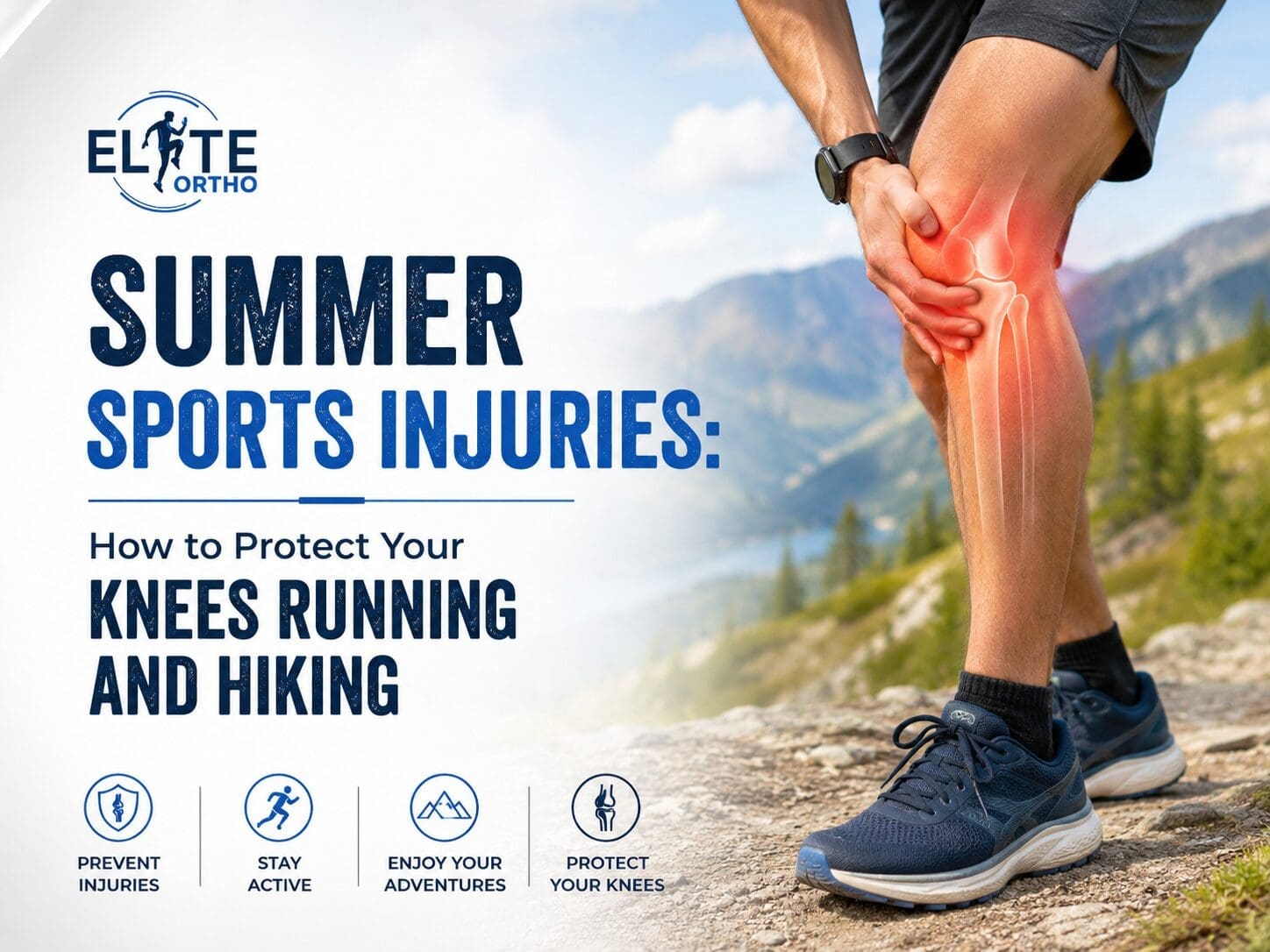
The summer season is the ideal time of the year to be active and outside. The warmer temperatures make it a good time to get moving, whether you're training for a race, hiking scenic trails, or just getting more active. But running, hiking, and other recreational activities that put more stress on your knees can increase your chances of injury.
The knee is one of the most complicated and heavily used joints in the body. It takes a lot of impact when they walk, jump, and climb on it. Knee pain and injury can develop rapidly when muscles become fatigued, terrain becomes uneven, or activity levels are increased. By recognizing some of the more frequent sports-related knee injuries and what you can do to prevent them, you can stay active and avoid injuries that could ruin your summer.
Why Do Summer Activities Increase Knee Injury Risk?
During summertime, many people are more active after they have not been as active during colder weather. This sudden activity can put undue strain on the tendons, cartilage, muscles, and knee joint.
There are multiple reasons for knee injuries in the summer:
- Increased running mileage
- Walking on rocky or uneven ground
- Inadequate warm-up routines
- Poor footwear choices
- A muscle weakness or imbalance is present.
- Overuse repetitive stress
- Dehydration and fatigue
If you catch the symptoms early and take preventive measures, there is a significantly reduced risk of long-term damage occurring.
Meniscus Tears: A Common Summer Knee Injury
Meniscus tears are a common injury in the knee that can happen during the summer. A common knee injury in the summer is a meniscus tear.
A meniscus is a section of cartilage that is used to act as a shock absorber between the thighbone and shinbone. The most common activities that put an athlete at risk for developing a meniscus tear are twisting, pivoting, squatting, and sudden changes of direction.
Symptoms of a Meniscus Tear
- Pain in the knee when you move it
- Swelling and stiffness
- Locking or catch sensation
- Inability to straighten the knee completely
- Feeling the knee might give way
A meniscus tear can occur when a runner or hiker slips on a trail or over uneven terrain or when they twist on the trail suddenly.
Prevention Tips
- Exercises to improve muscles around the knee and hip
- Make sure to avoid sudden changes in activity level
- Wear supportive shoes that have good grip
- When hiking on difficult ground, use trekking poles
- Increase flexibility through stretching regularly
Immediate assessment is critical as untreated meniscus tears can cause additional damage to the joint.
Patellar Tendinitis: Also Known As The “Jumper’s Knee” Problem
Patellar tendinitis is the result of an irritation or inflammation of the tendon that joins the kneecap to the shinbone. It is not just a jumping sport, as it can also occur in runners, hikers, and people who are active with repetitive knee use.
Symptoms of Patellar Tendinitis
- Lower leg pain, below the kneecap
- Symptoms include tenderness around the tendon
- More pain with activity
- Inability to climb stairs without being uncomfortable
- Stiffness after exercise
This can be caused by overtraining and poor recovery.
Prevention Tips
-
There is a need to build up the intensity of the training over time.
-
Take rest breaks during your workout program
-
Strengthen quadriceps and hamstring muscles
-
Stretch your muscles before and after exercising
-
Discuss small knee aches and pains to prevent them becoming bigger problems
Early treatment can help prevent chronic tendon problems and lengthy recovery periods.
Runner’s Knee: A Frequent Cause of Summer Knee Pain
Runner's knee is a common cause of knee pain during the summer.
Runner's knee, as it is often called, is among the top overuse injuries suffered by runners and hikers. It occurs when the kneecap moves out of its groove, causing irritation and pain.
Symptoms of Runner’s Knee
- Pain in the area behind and/or around the kneecap
- Pain with walking and running downhill
- Prolonged sitting leads to discomfort
- Clicking and grinding noises
- More pain in stairs or squats
Any runner can develop runner's knee; it's not just reserved for those who are more experienced.
Prevention Tips
- Enhance running technique and efficiency
- Strengthen hip and core muscles
- Change out worn running shoes
- Avoid sudden increases in mileage
- Incorporate cross-training activities
Early intervention of biomechanical problems can dramatically decrease symptoms and enhance performance.
IT Band Syndrome: A Common Hiking and Running Complaint
A frequent complaint from hikers and runners is the IT band. The iliotibial (IT) band is a thick band of connective tissue along the outside of the thigh. The IT band gets irritated with repetitive motion, causing IT band syndrome.
IT band pain is common among long-distance runners and hikers, especially when running or walking downhill.
Common signs and symptoms of IT band syndrome include the following:
- A swelling on the outside of the knee
- Sharp discomfort during running
- Worsening pain on downhill slopes
- The outside of the leg is tender
- Worse symptoms with continued activity
Prevention Tips
- Strengthen hip stabilizers to improve lower back strength.
- Avoid overtraining
- Use proper footwear
- Regularly stretch and foam-roll
- Slowly build up distance on hikes and runs
If the symptoms of the IT band are ignored, it may lead to long-lasting discomfort and decreased athletic performance.
Early signs and symptoms of arthritis
Most active adults will notice their first symptoms when they start to play sports again. Arthritis develops when the cartilage that cushions the joint starts to deteriorate over time.
Although exercising is good for joints, too much pressure or too much repetition may create the symptoms of arthritis.
The initial symptoms of knee arthritis may include the following:
- Stiffness in joints that comes after rest
- Mild swelling around the knee
- Any pain during or after exercise
- Rough, gritty or ‘crunchy' feelings
- Limited range of motion
People over the age of 40, those with a history of injuries, and those with a family history of arthritis might be at higher risk.
Managing Early Arthritis
- Keep the body weight at a healthy level.
- Actively engage in low-impact activities
- Strengthen supporting muscles
- Wear supportive footwear
- If symptoms don't go away, get a professional assessment
If diagnosed and treated early, the effects of the disease can be minimized, and joint function can be maintained.
Essential Knee Protection Tips for Summer Activities
These tips can help keep your knees safe during summer months, whether you're pedaling through the neighborhood or trekking the trails of the mountains.
Warm Up Properly
Take 5-10 minutes to do dynamic stretches and light movement before doing vigorous activity. Warming up helps to increase blood flow and prepare muscles for exercise.
Strengthen Supporting Muscles
The quadriceps and hamstring muscles, glutes, and core muscles are strong and help to stabilize the knee joint and decrease the stress.
Choose Appropriate Footwear
The right running shoes or hiking boots can help to correct alignment, absorb shock, and alleviate knee strain.
Increase Activity Gradually
Don't increase the amount you run, how much you gain and grade, or how hard you work at the same time. Aim to adhere to the 10 percent rule when building up to activity levels; this means gradually building up over time.
Stay Hydrated
Dehydration leads to muscle fatigue, altered movement mechanics, and increased risk of injury in the outdoors.
Listen to Your Body
Chronic pain should not be normal. If it persists for a few days or becomes worse when exercising, it's time to see the doctor and not continue suffering.
When to Seek Professional Care
Not all knee injuries can be treated with rest and activity adjustment; however, some require specialized treatment. While some knee injuries can be treated with rest and activity adjustment, others require special treatment. If you experience swelling, instability, locking, significant pain, or difficulty walking, it's important to consult an orthopedic specialist.
A comprehensive evaluation can help determine the root cause of your symptoms and develop a treatment program tailored to you to keep you healthy and active.
Conclusion
Running, hiking, and outdoor sports are wonderful ways to enjoy summer but are also a time when knees are prone to injury. If you don't get treatment for some of these conditions like meniscus tears, patellar tendinitis, runner's knee, IT band syndrome, or early arthritis symptoms, they can hinder your ability to be active.
The good news is that you can greatly minimize your risk of an injury by focusing on the proper training methods, strength development, appropriate footwear, and early intervention.
Your knee pain doesn't have to stop you from enjoying your summer. With the orthopedic specialists at Elite Ortho, you can be confident in the things you love to do again following a comprehensive evaluation, diagnosis, and treatment.
Frequently Asked questions (FAQs)
What is the most common knee injury among runners?
Runner’s knee (patellofemoral pain syndrome) is one of the most common knee conditions affecting runners due to repetitive stress and improper kneecap tracking.
Can hiking cause a meniscus tear?
Yes. Hiking on uneven terrain can lead to twisting movements that increase the risk of a meniscus tear, particularly during descents.
How can I prevent knee pain while running?
Gradually increase mileage, wear proper footwear, strengthen supporting muscles, maintain good running form, and allow adequate recovery between workouts.
What are the early signs of knee arthritis?
Common early symptoms include stiffness, mild swelling, pain during activity, grinding sensations, and reduced joint mobility.
When should I see a doctor for knee pain?
You should seek medical attention if pain persists, swelling develops, the knee feels unstable, or you experience locking, catching, or difficulty walking.
Get expert care before your symptoms progress with Elite Ortho DMV
At Elite Ortho DMV, our advanced surgical techniques are designed to match your body’s unique anatomy helping you move freely and recover faster.