
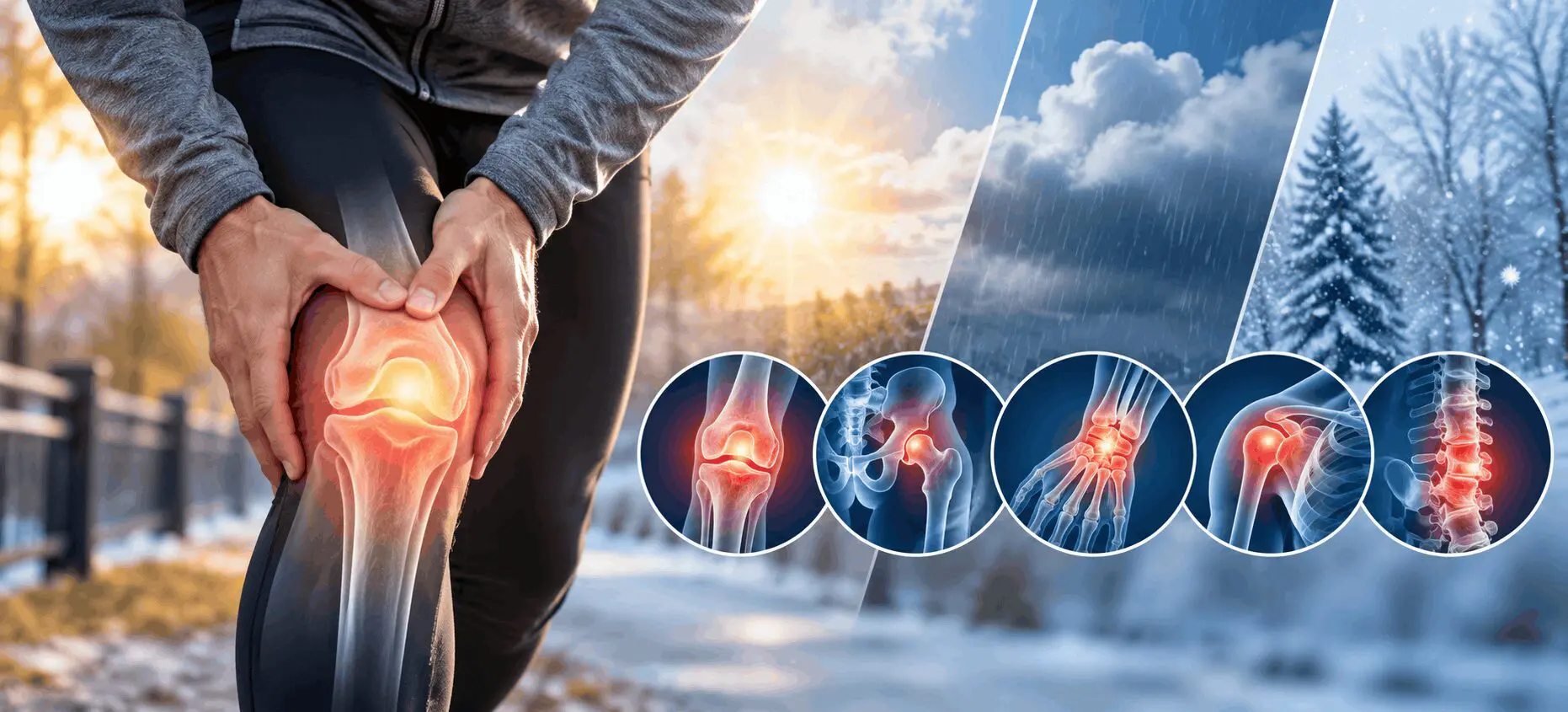
Picture a damp morning when your knees feel like rusty hinges. Plenty of people say their joints ache before a storm. The right joint pain treatment can make those days easier, even if the cause is unclear. Some people notice changes when the temperature or air pressure shifts. Here’s what may be going on and what helps.
Why Do Joints Hurt When the Weather Changes?
Some people feel more joint pain when the weather shifts, but science hasn’t proven why. Leading ideas include falling air pressure, colder temperatures, and sensitive joints. Weather isn’t known to damage joints directly. It may simply make an existing problem easier to feel.
Possible factors include:
- Temperature changes: Cold may make muscles and tissues feel tighter.
- Barometric pressure: Some researchers think falling pressure affects tissue around the joint.
- Less activity: Staying inside can leave joints stiff.
- Muscle tension: Cold weather can make muscles tense up.
- Personal sensitivity: Some people notice pain changes more than others.
The evidence is mixed. Some studies find a link, and others don’t.
Can Cold Weather Make Arthritis Pain Worse?
Many people with arthritis say yes, though research doesn’t fully agree. Arthritis pain in cold weather is commonly reported, but cold doesn’t cause arthritis.
Here’s what may play a role:
- Osteoarthritis: Worn cartilage can make joints stiff and achy, especially after rest.
- Rheumatoid arthritis: Flares can feel worse when you’re less active or more tense.
- Less movement: Winter often means fewer walks and more sitting.
- Pain sensitivity: Two people with the same arthritis can feel very different pain.
Cold doesn’t increase inflammation in every patient.
Which Joints Are Most Affected by Weather Changes?
People report weather-related joint pain in many places. These are the most common:
- Knees
- Hips
- Hands and fingers
- Shoulders
- Lower back
Weight-bearing joints like the knees and hips often get the most complaints. Still, weather alone rarely explains it. Pain usually traces back to an existing condition, such as arthritis, an old injury, or wear over time.
How Can You Relieve Joint Pain During Weather Changes?
The best approach depends on what’s causing your pain. These steps are a good start:
- Stay active with low-impact exercise like walking, swimming, or cycling.
- Dress warmly, and use heat for stiffness, such as a heating pad or warm shower.
- Do gentle stretching and mobility exercises.
Keep a steady routine, even on gloomy days. - Try Physical Therapy if movement is getting harder.
- Ask your doctor which pain relievers are safe for you.
- Keep a healthy weight to take stress off your knees and hips.
Good joint pain treatment starts with finding the cause, not just masking the ache.
When Should You See an Orthopedic Specialist for Joint Pain?
Weather isn’t always the culprit. See an orthopedic joint pain specialist if you have:
- Pain that lasts or keeps getting worse
- Swelling that keeps coming back
- Less movement in a joint
- Trouble walking or doing daily tasks
- A joint that feels unstable
Pain that wakes you at night
Get urgent care for a hot, swollen joint with a fever, or severe pain after an injury. Those can signal infection or a fracture.
What Joint Pain Treatments Can an Orthopedic Doctor Recommend?
Most people don’t start with surgery. Doctors usually try simpler options first:
- Physical therapy
- Exercise and activity changes
- Anti-inflammatory medication, when appropriate
- Joint injections for certain conditions
- Arthritis Management
For targeted care, see Knee Pain Treatment, Hip Pain Treatment, or Arthritis Treatment. Surgery is for specific, severe cases that haven’t improved with other care. Your doctor will explain your options.
Frequently Asked Questions (FAQs)
Why do my knees hurt when it rains?
It’s not fully understood. Changes in air pressure, cooler temperatures, and less activity may all play a part, especially if you already have arthritis.
Does barometric pressure affect joint pain?
Some studies suggest a link, but results are mixed. Some people seem more sensitive to pressure changes than others.
Is heat or cold better for weather-related joint pain?
Heat often eases stiffness. Cold may help with swelling after activity. Use whichever feels better, and protect your skin.
Can weather-related joint pain be treated permanently?
Not usually. Treatment can reduce symptoms and improve function, but results vary. A specialist can build a plan for you.
Conclusion
Weather may change how your joints feel, but it isn’t proven to damage them. If pain lingers, don’t just blame the forecast. The right joint pain treatment starts with knowing the cause.
Find Relief With Personalized Joint Pain Treatment
Dealing with persistent joint pain, stiffness, or trouble moving? Contact Elite Ortho DMV for an orthopedic evaluation and a plan built around you.